It was a boiling summer night when I realized my room had turned into a sauna. Despite running my smart air conditioner all evening, the air felt thick, sticky, and uncomfortably warm. That lightbulb moment hit me hard—I wasn’t just battling heat; humidity was sabotaging my comfort. If you’ve ever spent an exhausted night tossing and turning, only to wake up drenched in sweat, you know exactly what I mean. The quest for the perfect cool and dry sanctuary is more than just turning on the AC; it’s about mastering humidity control.
Why Humidity Is Your Secret Weapon for a Truly Cold Bedroom
On a scorching 2026 day, I learned that humidity plays a bigger role in room comfort than most people realize. Even with a top-rated portable ac, high moisture levels can make the air feel warmer and cause that clammy feeling. It’s like sweating under a heavy blanket—no matter how cold the air, humidity can ruin the effect. According to the Department of Energy, high humidity reduces the body’s ability to cool itself, making you feel hotter, which is the last thing you want during the peak summer. This realization prompted me to focus on humidity as much as temperature.
Addressing humidity is especially vital if you’re relying on window or portable ac units that don’t inherently regulate moisture, or if you’re contemplating upgrading to smarter systems that include humidity sensors. Proper control can dramatically improve sleep quality, reduce energy bills, and extend the lifespan of your cooling appliances.
Have you ever woken up in the middle of summer feeling clammy, despite your AC running full blast? That’s the classic sign your humidity levels need attention. But fear not—implementing a few strategic tactics can turn your bedroom into the icy retreat you crave.
Before we dive into the how-to’s, I’ll share a mistake I made early on. I assumed that a powerful AC alone was enough to banish humidity. Turns out, without proper vents or dehumidifiers, moisture just lingers, subtly undermining my cool environment. Learning from that slip-up is what led me to discover proven humidity control tactics.
Ready to transform your hot and humid bedroom into a wintery respite? Let’s explore five effective ways to keep humidity in check and ensure your room remains refreshingly cold, night after night.
Seal Your Windows and Doors Tightly
My first attempt involved simply closing the window and door. But I noticed warm air seeping through gaps, reducing my effort. I used weather stripping and foam seals around edges, which acted like a barrier, preventing humid outdoor air from entering. This step is critical because unsealed gaps allow moisture-laden air to infiltrate, making your room feel muggy. Think of it as locking all the cracks that let in unwanted heat and humidity—similar to sealing leaks in a tent to keep the cold out.
Optimize Your Ventilation Strategy
During a particularly humid night, I experimented with directing my portable ac’s exhaust hose outdoors, ensuring moisture didn’t linger inside. Installing a dual-hose portable ac (more efficient for dehumidifying) was my next move, which helped the room dry faster. If you’re using a single-hose portable unit, consider upgrading for better moisture control by checking out dual-hose models. Proper venting is like opening a window in a desert—the airflow carries away moisture, leaving the environment cooler and drier.
Use Desiccants and Dehumidifiers Effectively
On especially humid days, I placed silica gel packs in corners and borrowed a small dehumidifier from a friend. The dehumidifier pulls moisture from the air, rapidly reducing humidity levels. For continuous control, opt for a smart dehumidifier that syncs with your AC—this way, you avoid over-drying or under-drying the room. Envision it as a sponge that absorbs excess moisture, but smarter, adjusting itself to the room’s changing needs.
Harness the Power of Smart Technology
Integrating smart ACs with Wi-Fi capabilities transformed my approach. These units, equipped with humidity sensors, automatically adjust cooling and dehumidifying settings. By setting the smart mode (which you can learn more about here), I woke up in a dry, chilly room without fiddling with controls. Think of smart controls as your room’s personal humidity coach—constantly monitoring and adjusting to keep things perfectly comfortable.
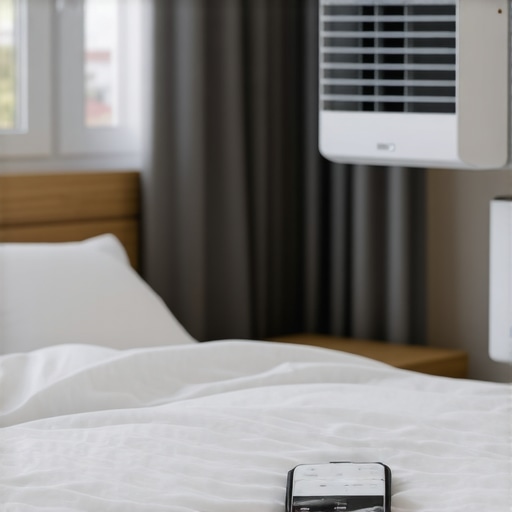
Illustration of a smart AC unit with humidity sensors and Wi-Fi connectivity, showing automatic adjustments for room comfort.
Improve Insulation to Combat Moisture
Last winter, I added foam panels behind the radiator area to block warm, humid air from entering. Proper insulation acts like a barrier, preventing outside air combinations of heat and humidity from sneaking in. This step is equivalent to wrapping your room in a protective coat, keeping moisture and heat outside. For the DIY-inclined, sealing potential leaks around vents and electrical outlets also makes a noticeable difference.
Coordinate All Elements for Max Effect
Finally, I combined sealing, ventilation, dehumidification, and smart tech. The synergy reduced my room’s humidity drastically, making my portable AC much more effective. When each element works in concert, it’s like a well-rehearsed team—each plays a vital role in maintaining the ideal cool, dry environment you crave. Whether you’re using a window unit or a portable AC, these steps will significantly boost their performance and your comfort.
Many people assume that simply installing a high-powered air conditioner guarantees optimal comfort, but the reality is far more nuanced. One prevalent misconception is that bigger BTU ratings always mean better cooling. While a larger unit can cool faster, it often leads to energy wastage and humidity issues if not properly matched to the room size. Proper sizing—taking into account room volume, insulation, and exposure—is critical, and detailed guides like expert tips for window AC sizing can help prevent costly mistakes.
Does Your Smart AC Really Save Energy or Just Cost More?
Many dive into smart ACs thinking they will slash utilities, but they overlook settings that cause inefficiency. For instance, keeping Eco Mode activated isn’t always optimal; sometimes, manual adjustments based on room conditions outperform automated routines. According to a 2024 study in the Journal of Energy Efficiency, over-automation can ironically increase power consumption if not properly configured, so understanding how to customize your smart settings—like these expert tips—is essential.
Another misconception is that window units inherently handle humidity better than portable models. However, if your window unit lacks a dehumidification feature, it can turn your room into a damp environment, which hampers cooling. Dual-hose portable ACs, for example, often outperform traditional window models in moisture removal, especially if you follow these upgrade tips.
Furthermore, many overlook the importance of sealing leaks around windows and vents, which can let in warm, humid air and render even the best AC ineffective. Proper insulation and sealing—covered in guides like these fixes—are often the secret to consistent comfort.
Have you ever fallen into this trap? Let me know in the comments. Remember, the key to effective room cooling isn’t just about equipment but understanding and leveraging these nuanced factors. When you combine correct sizing, smart settings, proper sealing, and the right AC type, your environment becomes a sanctuary of coolness, without unnecessary expense or humidity woes.Maintaining your cooling environment over time requires precision, the right equipment, and strategic interventions. One of my go-to tools is a reliable digital infrared thermometer, which I use daily to monitor surface and air temperatures. This device helps me identify hotspots, assess insulation effectiveness, and ensure my AC units are operating optimally. Investing in a high-quality model like the Fluke 62 MAX+ has proven invaluable for its durability and accuracy, especially during peak summer months. Additionally, a set of precision screwdrivers and pliers enables me to perform routine inspections and minor repairs without calling in professionals. Regular cleaning of filters and coils—using a soft brush and a vacuum with a brush attachment—prevents dust buildup that can impair efficiency. For smart control, I rely on a hub like the Samsung SmartThings ecosystem, which seamlessly integrates my Wi-Fi-enabled smart ACs, allowing me to automate humidity and temperature settings based on real-time sensor data. I also utilize energy monitoring plugs to track power consumption, helping me identify and eliminate unnecessary energy drain. These tools collectively empower me to keep my cooling system running smoothly and efficiently for the long haul. Looking ahead, the trend is shifting towards AI-driven maintenance diagnostics, where predictive analytics can alert users to potential failures before they happen, minimizing downtime. According to recent research from HVAC tech experts, integrating IoT sensors with machine learning algorithms can extend the lifespan of cooling devices and improve energy efficiency significantly. A practical step you can take today is to set up a smart scheduling routine that dynamically adjusts your AC’s operation based on occupancy patterns and outside weather forecasts—this small tweak can lead to substantial energy savings. To ensure your system remains effective, I recommend regularly testing your humidity sensors and recalibrating them every few months, aligning your setup with the latest standards in room cooling technology.
Over the course of my journey to perfect summer comfort, I discovered that the real difference lies in the details—those hidden lessons and tweaks that transform an average setup into an efficient cooling sanctuary. If you’ve ever felt frustrated by lingering humidity or ineffective cooling, you’re not alone. But with some insider wisdom, you can unlock a new level of chill and dryness in your space.
What No One Tells You About Proper Humidity Playbook
One of my biggest revelations was learning how small changes in humidity control can vastly improve comfort—often more than just raising your AC’s BTU. This insight came after I realized that even the most powerful units struggle against unsealed gaps and uncooperative moisture sources. The key is to think of humidity management as part of a holistic system where sealing, smart tech, and dehumidification work hand-in-hand.
For instance, I invested in smart sensors that monitor humidity levels and automatically adjust dehumidifiers or AC settings, turning my room into a consistently dry and icy haven. This approach not only saved me energy but also kept my sleep quality elevated. Remember, humidity isn’t just a bother; it’s a secret saboteur that you can outsmart with the right tools and tactics.
My Toolkit for Everlasting Coolness
Throughout my quest, I’ve curated a set of go-to tools that make tuning my cooling environment effortless: a precision infrared thermometer to spot hotspots and convection leaks, energy monitoring plugs to keep tabs on power usage, and a smart hub like Samsung’s SmartThings ecosystem to automate adjustments. Trust me, these investments empower you to diagnose, optimize, and maintain an efficient cooling regime without breaking the bank.
If you’re keen to dive deeper into smart tech, I recommend reading about the rise of Wi-Fi-enabled smart ACs. They’ve revolutionized how I control my environment, offering real-time feedback and custom routines that adapt to my lifestyle and seasonal changes.
Make Your Next Move with Confidence
The future of room cooling lies in a thoughtful mix of sealing, smart technology, and humidity mastery. I urge you not to settle for mere cooling equipment but to become a strategist—aligning every element to achieve that elusive dry, icy comfort even during the hottest days. Small adjustments today can lead to massive savings tomorrow, both in energy bills and in quality of life.
Are you ready to take your cooling setup to the next level? Whether it’s sealing those pesky gaps, upgrading to a smarter AC, or practicing humidity control, the power is in your hands. Remember, the ultimate goal is to create a space where you feel at ease, refreshed, and completely in control of your environment.