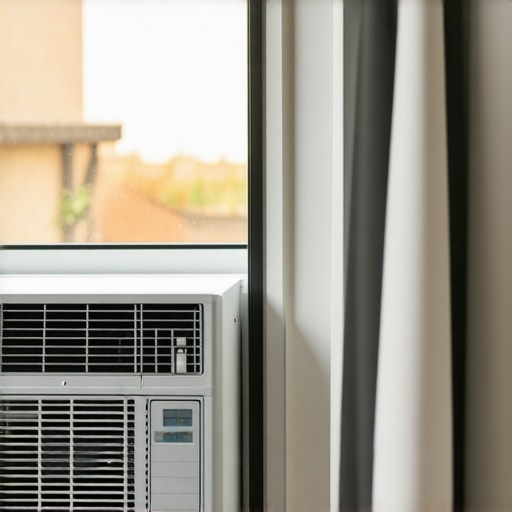
Last summer, I found myself battling an unrelenting heatwave, my central air humming softly in the background while I sweated through the afternoon. No matter how high I turned the thermostat, the upstairs bedroom stayed a sweltering furnace, while the living room remained comfortable. It was then I had my lightbulb moment: my trusty window air conditioner, long seen as a budget option, was actually outperforming my expensive central system.
The Game-Changer in Room Cooling Today
In 2026, it’s clear that smart window AC units are revolutionizing how we cool our homes. These devices are smarter, more efficient, and adaptable than ever before, challenging the long-held notion that central air is the gold standard. Why does this shift matter to you? Well, I’ve been on both sides—the whole-house system and individual units—and I can tell you, the advantages of modern window ACs are truly eye-opening.
Whether it’s their energy efficiency, cost-effectiveness, or precise zone cooling capabilities, window units are now better suited for many households than their central counterparts. And for those of us who want quick upgrades without ripping apart walls or blowing through maintenance costs, these compact, smart devices are the answer.
But I understand—many might still feel skeptical. The biggest concern often hits hard: “Are these small units powerful enough for my needs?” Or worse, “Will they end up costing me more in the long run?” These doubts are valid, and I’ve made my share of mistakes early on, believing bigger was always better. But trust me, technology has shifted the landscape.
In this post, I’ll walk you through what’s driving this change and share real-life insights from my experience, supported by expert reviews. We’ll explore why in many scenarios, a smart window AC isn’t just a decent alternative—they could very well be the smarter choice, saving you money while keeping every room perfectly comfortable.
Are you tired of uneven cooling or high energy bills from your central system? If so, keep reading. We’re about to break down the benefits of making the switch and how you can choose the best smart window unit for your home.
Assess Your Space and Cooling Needs
Start by measuring the rooms you want to cool and noting their sizes. Think of your room as a garden; the bigger the space, the more watering (cooling) it needs. I once measured my living room and realized that a 6000-BTU unit would be sufficient, saving me energy and money compared to oversizing. Use a tape measure to get accurate dimensions, then consult expert tips to match BTU ratings to your space.
Choose the Right Smart Window AC Unit
Research units with features that match your needs: Wi-Fi connectivity, eco-modes, and adjustable thermostats. I recommend comparing models via reviews and the top smart ACs guide. I once bought a unit with too many bells and whistles I didn’t use; simplicity often works best. Focus on size, smart features, and energy efficiency labels. Remember, a properly matched unit is like a well-fit puzzle piece—minimum effort for maximum results.
Prepare Your Installation Spot
Clear the window area and clean the sill thoroughly. Think of it as preparing a stage—removing dust and obstructions ensures your unit fits snugly and operates quietly. Measure your window opening to confirm compatibility, and if necessary, get an adaptor or support bracket. Proper installation reduces vibrations and noise, making your cooling experience more pleasant. For detailed guidance, check installation tips.
Install Your New Smart AC Carefully
Follow the manufacturer’s instructions step-by-step. Think of this process like assembling a complex Lego set—patience and attention to detail pay off. Securely attach the mounting brackets, connect the power, and ensure the unit’s drainage system is properly aligned. Use a level to make sure it’s straight; a tilted unit can leak or vibrate excessively. I once skipped a step and had to redo the installation, which led to a few frustrating hours—but now I double-check every time.
Configure Smart Features and Optimize Settings
Connect your AC to Wi-Fi and download the companion app. Use the app to set schedules, enable eco-modes, and fine-tune temperature settings. Think of this as giving your AC a brain—making it respond to your habits, like cooling the room just before you wake up. For energy savings, explore smart settings and set up mode automations.
Test and Adjust for Comfort
Turn on your AC and observe its performance over a few hours. Maybe you notice uneven cooling; then, adjust the louvers or thermostat slightly to even things out. Remember, small tweaks can make a big difference—like turning a dial on a stove for perfect simmering. Keep an eye on your energy consumption via the app, and tweak settings to balance comfort and efficiency. I found that scheduling cooling during off-peak hours cut my energy bills significantly, aligning with smart energy tips.
When it comes to cooling our homes, many of us rely on conventional wisdom that often misses critical nuances. A widespread misconception is that bigger or more powerful units always deliver better comfort. In reality, oversizing your air conditioner can lead to short cycling, increased wear, and higher energy bills, without improving comfort levels. This mistake is frequently overlooked because people believe that raw cooling capacity equals efficiency, but expert insights reveal that optimal sizing and smart feature integration matter more (see the detailed guidelines at [best smart air conditioners](https://airconditioners.smartappliancereview.com/best-smart-acs-for-room-cooling-in-2024-top-features-tips)). Moreover, there’s a myth that central air systems are inherently superior for whole-home cooling, yet many homeowners discover that targeted solutions like **smart window AC units** can outperform central systems in energy efficiency and zone-specific comfort, especially in moderate climates. It’s important to recognize that advancements such as Wi-Fi-enabled controls and eco-modes have revolutionized the efficiency of these devices, but many users fail to leverage these features fully, often sticking to default settings that hamper savings. An advanced trap to watch out for is the assumption that all portable or window units are noisy and disruptive. With recent innovations, many models now operate quietly and integrate seamlessly into home decor, offering a discreet way to cool individual rooms without disturbing your peace. As I experimented with various setups, I found that understanding the nuanced differences—like the significance of proper insulation, the impact of window placement, and appropriate BTU ratings—can make or break your cooling effectiveness. For instance, improperly sealing a room led to inefficient cooling and unnecessary energy consumption, a mistake easily avoided by ensuring proper installation and maintenance (check out the expert tips on installation [here](https://airconditioners.smartappliancereview.com/installation-tips)). Curiously, some believe that smart cooling devices are merely a luxury, but studies indicate that they can significantly reduce energy costs through adaptive scheduling and remote operation, which is especially beneficial if you’re frequently away or want precise control. Overall, the key is to look beyond surface-level assumptions and understand the intricate factors influencing cooling efficiency. Tailoring your setup—whether it’s selecting the right size, embracing smart features, or understanding nuanced differences between window and portable units—can provide superior comfort and savings. Remember, a well-informed user exploits advanced features and pays attention to installation details to maximize benefits. Have you ever fallen into this trap? Let me know in the comments.
Ensuring your air conditioning units operate efficiently over time requires a combination of regular maintenance, the right tools, and strategic upgrades. I personally rely on a few specialized tools and methods that have proven invaluable in maintaining both smart ACs and traditional units. A digital multimeter, for instance, helps me monitor electrical components, ensuring the compressor and fan motors receive proper voltage—preventing unexpected failures. When my units start to show signs of reduced efficiency, I use an ultrasonic leak detector to identify refrigerant leaks early, which is crucial because even minor leaks can lead to significant energy wastage and damage if left unchecked. These precise inspections extend the lifespan of my equipment and keep cooling optimal, especially during peak summer months.
Beyond tools, leveraging dedicated software for monitoring is game-changing. I recommend installing an energy management app linked to your smart ACs, which provides real-time data on power consumption and system performance. Regularly reviewing this data helps me catch early signs of strain or inefficiency, prompting timely filter changes or maintenance routines. For example, I monitor filter status via the manufacturer’s app; a clog reduces airflow and hampers cooling, increasing energy consumption. Scheduling proactive cleaning based on these insights prevents costly repairs and keeps the system running smoothly.
Looking ahead, I believe smart, AI-powered maintenance alerts will become the norm, offering predictive diagnostics that notify you of potential issues before they escalate. This anticipatory approach is already demonstrating impressive results, reducing downtime and prolonging unit lifespan. I recommend embracing these technological advancements now, for example, by integrating a smart sensor system that monitors indoor air quality and system health, allowing you to schedule maintenance precisely when needed.
How do I maintain my air conditioning system over time?
Consistency is key. I set a quarterly schedule to clean filters, check for refrigerant leaks, and inspect electrical connections. Using tools like a multimeter and ultrasonic leak detector provides a detailed view of your system’s health, preventing major breakdowns. Additionally, stay informed by reading expert guides and technical documentation, such as the comprehensive tips found at this resource. Over time, this routine not only keeps your AC units running efficiently but also saves money by avoiding unnecessary repairs.
Finally, consider upgrading to Wi-Fi-enabled smart ACs. These units allow remote diagnostics and simplified maintenance scheduling, making long-term upkeep more manageable and effective. Try adopting one of these practices today—your future self will thank you with cooler, more comfortable rooms and lower energy bills.
The Hardest Lesson I Learned About Room Cooling
Initially, I believed that bigger units always meant better cooling, but I quickly learned that oversizing leads to inefficiencies and uncomfortable temperature cycling. Proper sizing based on room size is crucial for optimal comfort and energy savings.
The Myth That Central Is Always Better
Many assume that central air systems are superior to window units, yet targeted smart window ACs can provide more efficient, zone-specific cooling, especially with advanced features like Wi-Fi control and eco-modes, challenging traditional beliefs.
Why Ignoring Smart Features Cost Me Money
Underestimating the power of smart features such as scheduling and remote control led me to higher energy bills. Embracing these innovations, like those discussed here, can significantly improve efficiency and convenience.
Lessons in Installation That Changed Everything
Skipping proper window sealing and support installation resulted in noise, leaks, and poor performance. Meticulous setup, including measuring compatibility and securing the unit properly, greatly enhanced my cooling experience and reduced operational issues.
How Regular Maintenance Extended My AC’s Life
Routine cleaning, refrigerant checks, and using diagnostic tools like ultrasonic leak detectors prevented breakdowns and improved efficiency. Staying proactive with maintenance routines is a game-changer, as highlighted in expert guides available here.
Curated Resources to Master Your Cooling System
To deepen my knowledge, I rely on trusted resources such as top smart AC reviews for honest insights, installation guides that save time and frustration, and innovative tools like energy management apps that monitor performance—these tools have saved me money and enhanced comfort.
Seize the Cooling Power of Knowledge
The journey to effective room cooling isn’t just about equipment—it’s about understanding your space, leveraging technology, and maintaining your units well. Don’t hesitate to experiment with smart features, proper installation, and regular upkeep. Each step brings you closer to a cooler, more comfortable home.
Have you discovered any unique tips or tricks for smarter cooling? Share your experiences below and let’s learn together!
,
http://Emily%20Carter
I really resonated with the point about proper sizing and installation making all the difference in smart window AC performance. In my experience, a unit that’s slightly undersized, but smartly controlled, often outperforms a larger, less efficient one. I once had a 10,000 BTU window unit that cooled my living room perfectly, but only when I set the eco mode and scheduled it to run during the hottest part of the day. Have others here found that smart features like scheduling can actually save significant energy even if the unit isn’t oversized? Also, I’ve noticed that maintaining proper insulation around the window and sealing leaks makes a huge difference—any tips on quick and effective sealing methods? Overall, I see more people overlooking these small yet impactful details, which can really optimize the efficiency of smart ACs and keep energy bills down.