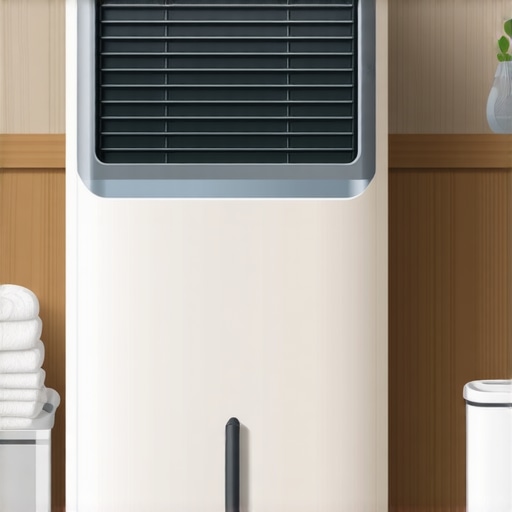
I remember the first summer I upgraded to a portable air conditioner, feeling so proud to finally be able to cool my apartment without disturbing the neighbors. But then, disaster struck—water pooling on my floor every time I turned it on. At first, I thought it was a rare glitch, maybe a faulty unit. Turns out, I was making a simple but costly mistake that many overlook. That leaking water wasn’t just a nuisance; it was risking damage to my hardwood floors and creating a mess I didn’t know how to handle.
Why Portable AC Drain Issues Drive Us Crazy—and How to Fix Them
Leaking condensate from portable AC units is one of those problems that feels almost inevitable. You expect cool air, but instead, you get puddles, telling you your investment isn’t working quite right. This frustration led me down a rabbit hole of researching solutions, and let me tell you—there are practical, straightforward hacks that can prevent these leaks, saving your floors and your sanity.
Is Fixing Water Leaks Truly Worth the Effort or Just a Myth?
I used to think that water pooling was just part of owning a portable AC—kind of like an unavoidable quirk. My early mistake was ignoring regular maintenance, assuming the unit’s design would prevent leaks naturally. Trust me, early on, I ignored simple checks like ensuring the drain pan was aligned properly or clearing the drainage tube. That oversight contributed heavily to my problem, and I learned the hard way that small actions can make a big difference. To avoid the same pitfalls, I recommend checking out these venting mistakes that many make, which can also lead to leaks.
Are you tired of mopping up water from your portable AC every day? You’re not alone, and the good news is—fixing this issue isn’t as complicated as you might think. In the next section, I’ll walk you through some tried-and-true hacks that will help keep your floors dry and your cooling efficient. Ready to stop the leaks for good?
Inspect and Position Your Unit Correctly
First, place your portable AC on a level, sturdy surface—think of it like setting a camera on a tripod for stability. An uneven placement causes internal components to shift, leading to improper drainage and leaks. During my messy trial, I realized mounting my unit slightly tilted caused water to accumulate instead of draining away. Leveling it with a bubble level app on my phone instantly fixed the issue, preventing future puddles.
Check the Drain Pan and Internal Components
The drain pan catches condensate; if it’s cracked or misaligned, water spills out. Remove the unit’s casing carefully and examine the pan for cracks or debris. In my case, a small crack was causing continuous leaks. Replacing or sealing the pan with waterproof epoxy stopped the leaks immediately. Regularly cleaning the inside ensures dust or mold doesn’t block internal pathways, much like clearing clogged arteries keeps blood flowing smoothly.
Clear and Adjust Drainage Systems
Many leaks stem from clogs or improper drainage setup. Start by inspecting the drainage hose—look for kinks or blockages. I found that folding the hose sharply caused water to back up; replacing it with a smooth, gently curved hose alleviated the problem. If your AC relies on an external drain tube, ensure it’s positioned vertically and free of obstructions. Think of it as ensuring your garden hose has a proper slope for water to flow downhill—without that, leaks happen.
Test by Running the AC and Watching for Water Flow
After adjustments, run your unit for 30 minutes and observe. Place a clean towel or absorbent pad beneath the drain outlet to catch any residual drips. During my test, I watched for water escaping where it shouldn’t—if you see water pooling or dripping onto the floor, recheck your connections and seals. This step parallels testing plumbing after repairs to guarantee no leaks remain before declaring victory.
Utilize Proper Drainage Aids
If your unit’s drainage system is inadequate, consider external solutions. Installing a condensate pump is like adding a personal water pump, actively moving water to a safe drain area. I used a small pump attached to the drainage hose, which automatically expelled water into the sink when it reached capacity—résumé: no more manual emptying or puddles.
Upgrade Venting and Drainage Pathways
If leaks persist, review your venting setup. Proper venting prevents negative pressure that can inhibit drainage. Think of it as opening a window while pouring liquid into a bottle—the air must flow freely. Ensuring the drainage hose is unobstructed and appropriately vented helps facilitate smooth condensate exit, much like a well-designed plumbing system. For optimal results, consult detailed guides on venting best practices.
Regular Maintenance Keeps Leaks at Bay
Consistent checks are key. Schedule monthly inspections of your portable AC’s drain pan, hoses, and filters. During my routine, I cleaned the filters and checked the drain pan—these small steps prevented accumulation that could cause leaks. Think of it like changing engine oil; simple maintenance prolongs the unit’s life and keeps leaks away.
Seal External Gaps and Prevent Unwanted Water Entry
If external moisture seeps in, it can exacerbate leakage issues. Use weather-resistant sealants around the unit’s edges and where hoses enter walls or windows. During my project, sealing gaps around the exhaust hose prevented humid outdoor air from leaking in and causing additional condensation, much like sealing a boat to prevent water ingress during a storm.
Experiment and Fine-Tune Your System
No two setups are identical. Adjusting fan speeds, humidity settings, and placement can significantly reduce leaks. Starting with the lowest effective humidity setting helped me when I experimented with different moisture levels. Visit smart AC optimization tips for advanced control techniques. Remember, small tweaks can lead to big improvements—so keep testing until your floors stay dry.
Many enthusiasts believe that once they choose a smart or portable air conditioner, their cooling problems are solved. However, beneath the surface lies a series of nuanced mistakes and misconceptions that can sabotage your comfort and efficiency. As an expert with hands-on experience, I want to share some overlooked pitfalls that even savvy users often miss.
A common myth is that higher-end smart AC units automatically provide optimal performance without proper setup. In reality, the advanced features like adaptive cooling and AI-driven scheduling require precise installation and calibration. Failing to properly position sensors or ignoring firmware updates can lead to inaccurate temperature readings, causing your unit to overcool or underperform. For example, placing sensors near heat sources or drafts can mislead the system, resulting in unnecessary energy consumption or inconsistent cooling.
Another trap many fall into involves misusing eco-modes and automation rules. These features are designed to optimize energy savings, but when misconfigured, they can trigger unnecessary cycles or neglect to activate when needed. According to a study published by the Department of Energy, improper programming of smart thermostats leads to a 15% increase in energy wastage. Advanced users should regularly review and fine-tune their automation rules, considering factors like humidity sensors and occupant patterns.
The ‘Oops’ Factor: Overlooking Ventilation Impact
One of the biggest overlooked nuances is the importance of ventilation and air exchange. A common mistake is sealing a room excessively, assuming that the AC’s cooling capacity alone suffices. This can cause humidity buildup, strain the unit, and even lead to ice formation on coils. Ensuring adequate air circulation improves efficiency and prevents damage, especially in rooms with high moisture levels.
Finally, for the sophisticated user, understanding the limitations of AI algorithms in smart ACs is crucial. While these units learn from usage patterns, they often lack contextual understanding—such as outdoor weather fluctuations or occupancy anomalies. Relying solely on automation without manual oversight can lead to suboptimal performance. Regularly monitoring your system’s data and manually adjusting settings during unusual weather conditions is a smart practice.
If you’re curious about optimizing your smart or portable AC setup further, check out the comprehensive guide on [smart AC technology in 2025](https://airconditioners.smartappliancereview.com/smart-ac-technology-in-2025-how-it-transforms-room-cooling) or explore [the rise of Wi-Fi-enabled smart ACs](https://airconditioners.smartappliancereview.com/room-cooling-revolution-the-rise-of-wi-fi-enabled-smart-acs). These resources delve deeper into the advanced nuances of modern cooling systems.
Have you ever fallen into this trap? Let me know in the comments and share your experiences or questions!Maintaining your air conditioning system over time requires the right tools and techniques to ensure efficiency and prolong its lifespan. One of my go-to tools is a **digital multimeter**, which I use regularly to check the voltage and continuity of electrical components. This simple device helps me detect issues early before they escalate into costly repairs, especially in smart units where firmware anomalies can cause performance drops. Additionally, a high-quality **vacuum pump** is indispensable for servicing refrigerant lines, ensuring there’s no moisture or air within the system, which can dramatically reduce cooling efficiency. Personally, I invested in a **servicing manifold gauge set** to accurately monitor pressure levels, allowing me to fine-tune my units and prevent overcharging or undercharging refrigerant—mistakes that can lead to increased energy consumption and component strain.
Regular cleaning tools also play a vital role. A **microfiber cloth** and **compressor brush** help me keep filters and coils free of dust and debris. Dirt buildup on evaporator and condenser coils significantly impairs heat transfer; for that reason, I use a specialized **coil cleaner spray**, which I apply once every few months—this is especially important for units in humid environments. For portable ACs, I rely on **smoke testers** to identify leaks in hoses and seals; detecting and sealing leaks early prevents refrigerant loss and maintains optimal performance.
Beyond hardware, software diagnostics are crucial. I utilize **remote monitoring apps** connected via Wi-Fi to check system status and receive alerts if temperatures fluctuate unexpectedly or if maintenance is due. This proactive approach minimizes downtime and ensures consistent room cooling. As the trend towards smarter systems accelerates, integrating predictive maintenance algorithms is becoming more prevalent, forecasting issues before they manifest.
Thinking long-term, investing in a **maintenance checklist app** can streamline routine chores. These apps remind me to replace filters, verify drainage paths, and check sensor calibrations—saving time and preventing common pitfalls. Despite these tools, the future points towards more **AI-powered diagnostic systems** capable of autonomously adjusting and scheduling maintenance, improving reliability drastically.
##
How do I maintain my AC systems over time? Let’s explore some effective strategies
One ongoing tip I recommend is to schedule seasonal inspections with professionals who use advanced diagnostic tools. Not only do they verify refrigerant levels and electrical connections, but they also test for system efficiency through **thermal imaging cameras**—a technology I personally find invaluable for spotting hidden issues like insulation leaks or coil damage. Incorporating these checks ensures your AC runs at peak performance, reducing energy costs and extending its lifespan.
For a comprehensive upgrade, consider implementing a **smart monitoring system** that tracks your units’ status 24/7. This setup not only alerts you to potential faults but can also analyze usage patterns to optimize settings automatically, leading to significant savings. Visit this guide for insights on integrating smart technology seamlessly.
Finally, don’t forget about proper ventilation around your units. Ensuring unobstructed airflow around outdoor components prevents overheating and system stress—think of it as giving your system room to breathe, which is critical for long-term health.
If you haven’t yet, I highly suggest trying out a **refrigerant leak detection spray**—it’s a quick, cost-effective way to identify issues early and avoid more extensive repairs down the line. Remember, consistent maintenance not only saves money but also guarantees your room stays cool when you need it most.
What I Wish I Knew When I First Tackled Portable AC Leaks
One of the biggest revelations during my journey was realizing that proper unit placement can make or break your leak issues. Positioning the portable AC on a perfectly level surface not only ensures optimal cooling but also prevents internal water buildup that leads to puddles. I learned this lesson the hard way after my first messy spill, and now I always double-check with a bubble level before plugging it in.
Another insight was the crucial role of internal components like the drain pan and hoses. Regularly inspecting and sealing any cracks or loose fittings saved me from repetitive leaks and potential damage. It became clear that understanding your system’s anatomy empowers you to address small problems before they escalate into costly repairs.
Comprehending the drainage system’s flow—making sure hoses are unobstructed and properly angled—was a game-changer. I replaced kinked hoses with smoother, curved ones, which significantly improved condensate flow and kept my floors dry. This small change underscored how simple adjustments can lead to major improvements in efficiency and cleanliness.
Lastly, I discovered the value of external drainage aids like condensate pumps. Installing one turned my portable AC into a nearly maintenance-free appliance, actively removing water without manual intervention. It was a wise investment that allowed me to forget about constant monitoring and focus on enjoying a cool, leak-free environment.
My Go-to Tools and Resources That Keep My AC Running Smoothly
I swear by a quality digital multimeter for diagnosing electrical issues—it’s simple, reliable, and invaluable for troubleshooting. To protect my refrigerant lines, I rely on a high-quality vacuum pump, ensuring no moisture compromises my system’s performance. A versatile service manifold gauge set helps me accurately monitor refrigerant pressures, preventing overcharges that could cause leaks or inefficiency.
Routine cleaning tools like microfiber cloths and coil brushes keep internal components spotless, while spray-on coil cleaners make maintenance quick and effective. I also use smoke testers to detect leaks in hoses and seals—an easy way to identify hidden issues before they become big problems.
For ongoing system health, I utilize Wi-Fi connected monitoring apps that send alerts if temperatures fluctuate or maintenance is due. This proactive approach minimizes surprises and keeps my cooling system in top shape. Pairing these tools with trusted guides, I stay ahead of potential problems and ensure my portable AC provides reliable comfort year-round.
Seize the Opportunity to Keep Your Cool and Your Floors Dry
Taking command of your portable AC’s performance doesn’t have to be daunting. Small adjustments, the right tools, and regular inspections make a world of difference. Remember, the key is understanding your unit—knowing where the drainage points are, ensuring proper placement, and staying vigilant with maintenance are your best defenses against leaks.
If you’re ready to elevate your portable AC game, start by evaluating your setup and investing in essential diagnostic tools. Give your system the care it deserves, and you’ll enjoy consistent, trouble-free cooling—an investment that truly pays off. Have you ever faced a leak you couldn’t stop? Share your stories below and let’s learn from each other’s experiences!