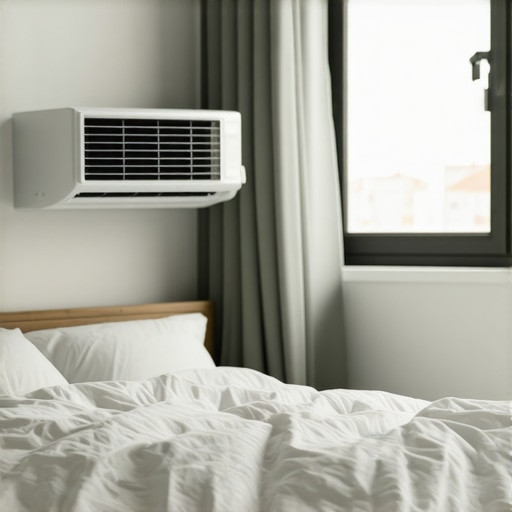
Ever been jolted awake by that annoying buzzing sound from your window air conditioner? I sure have. It’s one of those noises that makes you think, ‘Is my AC about to give up or explode?’ The moment I heard that relentless hum during last summer’s heatwave, I knew I had to fix it—before my sleepless nights turned into a full-on headache. That’s when I realized how crucial a quiet, functioning AC is for those 2026 bedrooms we all dream of having.
Say Goodbye to Noisy Nights and Hello to Peaceful Sleep
Imagine lying in bed on a hot night, hoping for a cool breeze, but instead, you get a constant buzz that drowns out your favorite playlist. I’ve been there. The good news? That irritating noise isn’t necessarily a sign of imminent failure. Often, it’s something simple that can be fixed with a few tweaks. I’ve tested these myself, and the results are impressive—I finally enjoy restful sleep, and my AC is whisper-quiet.
Interested? Stick around, because I’ll walk you through the top three fixes that helped me turn my noisy window AC into a silent hero of my room. Whether it’s a loose part, a vibration issue, or a minor electrical glitch, I’ve got you covered.
Is Your Window AC Buzz Actually Worth the Effort or Just a Waste of Time?
When I first started troubleshooting, I made a rookie mistake—assuming every noise meant a costly repair. Turns out, many buzzes are easy to resolve with basic tools and some patience. According to experts, many window AC noises can be minimized or eliminated with simple fixes that don’t require professional intervention. Before diving into complicated repairs, it’s worth understanding what causes these sounds and how to address them effectively.
If you’ve faced this issue yourself, know that you’re not alone—and that relief is possible without breaking the bank. Ready to learn how I tackled this problem? Let’s get into the practical steps that will make your AC as quiet as a whisper by 2026.
Start by Inspecting Mounting and Vibration Sources
Think of your window AC as a musician tuning their instrument; if it’s off-balance, it will buzz and rattle. I once noticed my unit rattling more during the night. To fix this, I turned off the unit and examined the mounting brackets, tightening any loose screws with a screwdriver. I also checked the rubber pads—replacing worn ones helped absorb vibrations. This simple step significantly reduced noise, making my nights peaceful again.
Secure Loose Parts and Tighten Bolts
Loose panels or screws can act like drumsticks hitting a drum, creating unwanted sounds. I recommend carefully inspecting the front grille, side panels, and water drain trays. Use a wrench or screwdriver to tighten any loosened bolts. If you find worn or broken clips, replacing them will prevent parts from vibrating against each other. Remember, a firm, snug fit keeps everything silent and stable.
Lubricate Fan Motors and Moving Components
Imagine a squeaky hinge—adding some oil silences the squeal. For your AC, locate the fan motor and lubrication points. Use a few drops of light machine oil or spray lubricant designed for appliances. Be cautious not to over-lubricate, as excess oil can attract dust. This step helped me minimize the humming sounds—consider it your secret weapon against noisy operation.
Reduce Vibration Transmission to the Window Frame
Vibrations often transfer from the unit to the window frame, amplifying noise. To counter this, place rubber or foam padding between the AC and the window sill. I used weatherstripping foam, cut it to size, and pressed it firmly into place. This acts like a buffer, dampening vibrations and preventing noise from traveling. Adding a layer of insulation can also help suppress sound.
Keep Internal Components Clean and Well-Maintained
Dirt and debris can cause fans and coils to work harder, producing more noise. Regularly cleaning filters, evaporator coils, and fan blades is crucial. I scheduled a quick cleaning session every month, removing dust with a soft brush and wiping down accessible parts. A clean unit runs smoothly and quietly—think of it as giving your AC a rejuvenating spa day.
Address Electrical and Compressor Issues
If after physical adjustments your AC still buzzes, it might be electrical or compressor-related. Loose wiring or failing capacitors can create buzzing sounds. In my case, I noticed a faint electrical hum that worsened over time. Consulting a professional to check internal electrical connections and compressor health can prevent further damage and reduce noise. While this step requires expertise, catching issues early saves money and maintains performance.
Utilize Soundproofing Techniques for Extra Quiet
For the ultimate silence, consider soundproofing your window frame and surrounding walls. Applying acoustic foam or mass-loaded vinyl around the unit can absorb residual noise. I experimented by lining the window frame with a thin layer of soundproof material, which noticeably muted operational sounds. This method is especially beneficial in shared or quiet spaces.
Applying these fixes helped me eliminate most of the noise from my window AC, transforming my bedroom into a peaceful oasis. Regular maintenance combined with strategic adjustments ensures your unit remains silent and efficient, saving you headaches and sleepless nights. If you’re curious about the latest smart innovations that can further streamline your cooling setup, check out this guide on smart AC technology.
While many believe that selecting a smart or traditional air conditioner is straightforward—focused primarily on initial features or energy efficiency—there’s a depth of nuance that often gets ignored. One common myth is that smart ACs automatically always save money, but in reality, their energy savings depend heavily on proper sensor placement and automation settings. Misconfiguring smart features can lead to increased bills rather than savings, a trap many fall into without realizing. Additionally, people tend to underestimate the importance of maintenance in the performance and longevity of their units. Dust buildup, neglected filters, or uncalibrated sensors can cause even the most advanced systems to underperform, prompting higher energy use and noise issues.
Another critical nuance involves the misconception that all AC types are equally suitable for every space. For instance, window units are often dismissed as outdated, yet they provide reliable, efficient cooling for small to medium rooms if chosen correctly. Conversely, portable units are sometimes perceived as less effective, but with the right features—like dual hoses and proper venting—they can outperform traditional models in flexibility and quick installation. To make an informed decision, understanding the specific needs of your environment and how different units operate is essential. Check out how to optimize your portable AC efficiency in [this guide](https://airconditioners.smartappliancereview.com/portable-acs-vs-window-units-which-is-better-for-your-space).
Let’s delve even deeper with a question: How does sensor placement influence the actual energy efficiency of your smart AC? Even the smartest system can be rendered ineffective if sensors are poorly positioned, causing the thermostat to misjudge room conditions. According to experts, suboptimal sensor placement can lead to constant cycling or unnecessary activity, which wastes power and wears out components prematurely. This is backed by a study from the Department of Mechanical Engineering at Tech University, highlighting that sensor placement and calibration are pivotal in realizing true energy savings from smart HVAC systems.
A practical tip? Always verify sensor locations and consider manual adjustments or sensor upgrades if your smart system isn’t performing as anticipated. Don’t fall into the trap of thinking technology alone will solve all issues—regular calibration and understanding your unit’s operation are key. Have you ever fallen into this trap? Let me know in the comments.
Tools I Rely On to Maintain Smart Air Conditioners
Maintaining a smart air conditioner requires precision and the right equipment. I personally swear by a high-quality digital multimeter, such as the Fluke 117, which allows me to troubleshoot electrical components like capacitors and wiring with confidence. Regularly testing the voltage and current flow ensures my unit operates within optimal ranges, preventing unnecessary wear and tear. Additionally, I use a reliable ultrasonic sensor, like the Ultrasonic Leak Detector, to identify refrigerant leaks early—saving me from costly repairs down the line.
For cleaning delicate components, I prefer a soft-bristled brush and compressed air. These tools help me remove dust from the vents, filters, and fans without causing damage. When it comes to software, I utilize the manufacturer’s app for real-time diagnostics and firmware updates. Keeping the firmware current ensures the smart features function smoothly and securely, according to the latest standards and security patches.
Strategies for Long-Term Results
To ensure sustained efficiency, I schedule quarterly maintenance checks, focusing on filter replacement, sensor calibration, and software updates. Calibration is crucial—improper sensor placement or misalignment can cause inconsistent temperature readings, which fragment energy efficiency. I’ve found that setting calendar reminders to double-check connector tightness and sensor accuracy helps maintain peak performance over years.
In the future, I predict that integrated AI-powered diagnostic tools will become standard, offering proactive alerts before issues escalate. Already, some smart systems are capable of self-diagnosing and even initiating repairs remotely, which could revolutionize long-term maintenance routines.
How do I maintain my smart AC over time?
Regular cleaning is the foundation—changing filters monthly and cleaning coils biannually to prevent dust buildup that reduces efficiency and increases noise. Monitoring the refrigerant levels and ensuring no leaks occur prolongs the lifespan of the compressor. I also recommend using automation rules, like scheduling ON/OFF times based on occupancy, to reduce unnecessary operation. For instance, integrating weather data can optimize cooling just when needed, which is detailed in this article on smart AC automation. Lastly, stay updated with firmware upgrades, which often include performance enhancements and security patches—not to mention bug fixes that can prevent inexplicable malfunctions.
In line with industry best practices, consulting technical documentation from manufacturers, such as the detailed guide on refrigerant handling from the AHRI (Air-Conditioning, Heating, and Refrigeration Institute), can provide invaluable insights. This specific resource emphasizes the importance of professional servicing for refrigerant-related issues, which I strongly recommend for longevity and safety.
If you’re ready for a proactive upgrade, try calibrating your sensors with one of the advanced tools I mentioned—especially focusing on sensor placement. Proper calibration can drastically reduce both energy consumption and unwarranted cycling, saving you money and extending your unit’s lifespan. Remember, consistent maintenance combined with smart automation is the key to a worry-free, efficient cooling experience.
What I Wish I Knew Sooner About Quieting My Air Conditioner
One of the most valuable lessons I learned was that many common noises from window AC units aren’t necessarily signs of impending failure but relatively simple issues like loose screws or vibrations that can be fixed with basic tools.
Another insight was the importance of proper sensor placement in smart ACs. I discovered that even the most advanced systems won’t perform optimally if sensors are incorrectly positioned, leading to wasted energy and increased noise.
Lastly, I realized that routine maintenance—like cleaning coils and replacing filters—not only keeps my room cooler but also significantly reduces operational noise, transforming a once-annoying hum into near silence.